Two kinds of fall debris, on two different schedules. Here’s what actually comes down in Bastrop County, when, and what it does to a lawn if it sits.
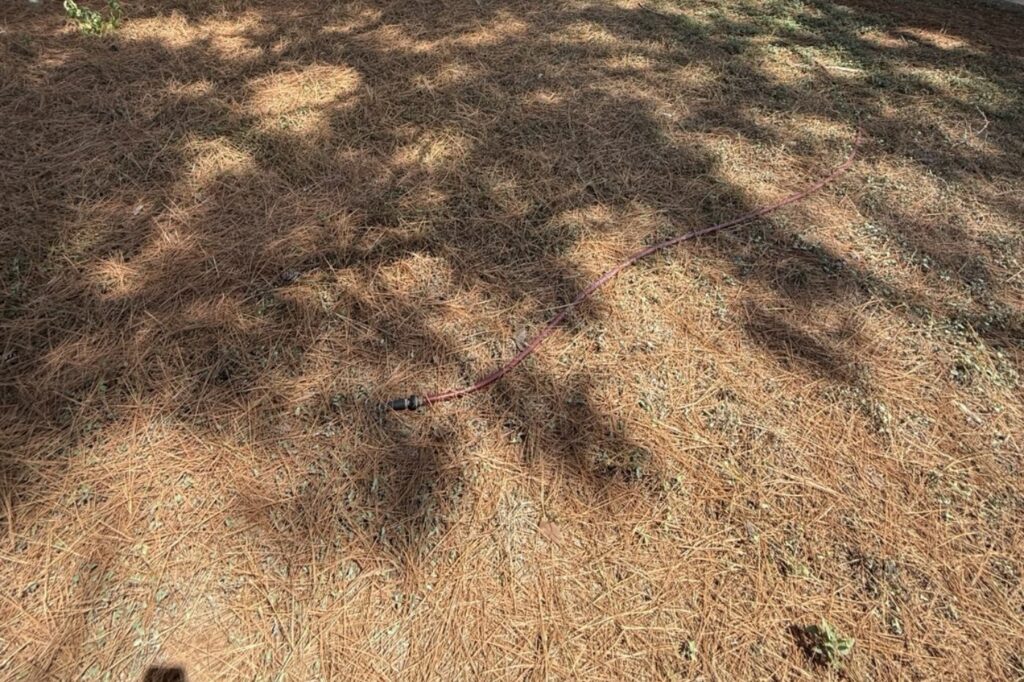
Most fall cleanup advice is written for places with one leaf drop and one rake. Bastrop isn’t that. Between the Lost Pines on the sandy uplands and the hardwoods down along the Colorado bottoms, a lot of properties here get needles and leaves in the same season — arriving weeks apart, behaving nothing alike, and needing different work to clear.
If you’ve raked a yard here and wondered why the needles just rolled over the tines, that’s why. Any landscaper who works these streets weekly learns the difference fast.
A hardwood leaf dries, curls and blows. A loblolly needle falls in a cluster of three, lands flat, and knits into whatever fell before it. Give that mat a few weeks and you get a layer that behaves more like felt than like litter.
Bastrop County knows what accumulated needles are. Clearing them off roofs and out of gutters, and keeping them back from foundations and out from under decks, is standard defensible-space maintenance — the same guidance Texas A&M Forest Service gives for properties in the Lost Pines. It’s ordinary yard work that happens to matter more here than most places.
The reason one cleanup rarely does it: the pines and the hardwoods aren’t on the same clock, and the native grasses are on a third one.
| What | When | What it needs |
|---|---|---|
| Loblolly pine | Late summer into fall | Pulled from turf, cleared from roof and gutters |
| Post oak, cedar elm | November into December | Blown down and hauled |
| Native bluestem, switchgrass | After first hard dormancy | Cut back before spring growth |
| Beds and borders | Alongside each pass | Cleared, edged, mulch topped up |
In practice most properties here want two passes — one once the pines have finished dropping, a second after the hardwoods are down. Larger or heavily wooded lots often want three.
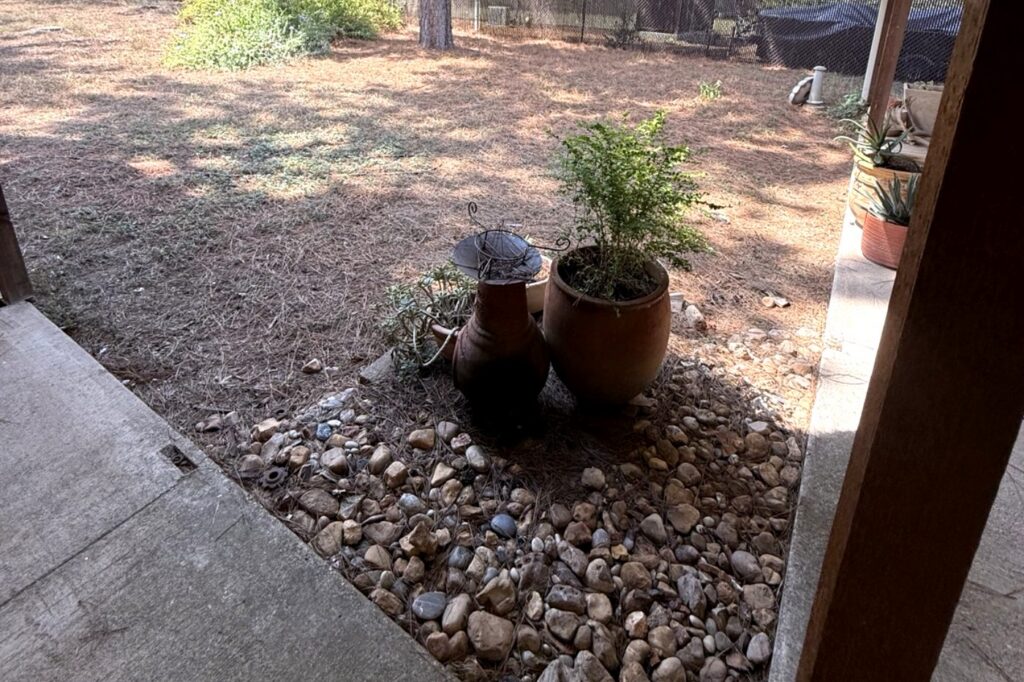
None of this is dramatic in November. It shows up in March, when the lawn comes back unevenly and nobody connects it to the fall.
Wherever the mat sat longest, the turf underneath went into dormancy weak and comes out of it weaker. On St. Augustine this reads as a dead patch that takes most of spring to fill back in.
Pine needles are the classic gutter clog — small enough to pass the leaf guards, long enough to bridge and knit. Water backs up over the fascia rather than through the downspout.
A damp needle layer banked against a foundation is cover for exactly what you’d expect. Keeping a clear band around the slab solves several problems at once.
We’re a local landscaper serving all of Bastrop County — Bastrop, Smithville, Cedar Creek, Paige, Red Rock and Rosanky, and through the neighbourhoods in the pines: Tahitian Village, Pine Forest, ColoVista and the rest. If your lot is wooded, say so when you ask for a quote; it changes the number of passes more than the square footage does.
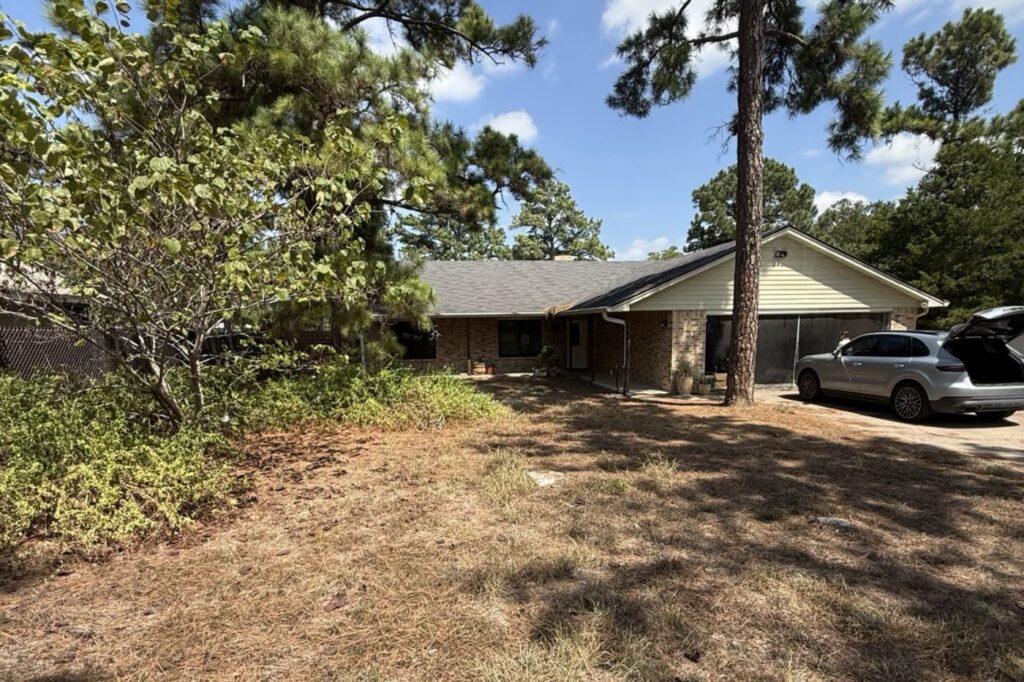
Tell us where you are and roughly how wooded the lot is. Most quotes go out the same day.
Get My Free Quote